



Essential Oils & Sun Safety: Phototoxic Oils and Aromatherapy Safety Guide
When using essential oils on the skin, it is important to understand sun safety and phototoxicity. Some essential oils — especially certain citrus oils — contain natural compounds that may react with sunlight and increase skin sensitivity to UV rays. This reaction is known as phototoxicity, and it can cause redness, irritation, or sunburn-like reactions if the skin is exposed to sunlight after application.
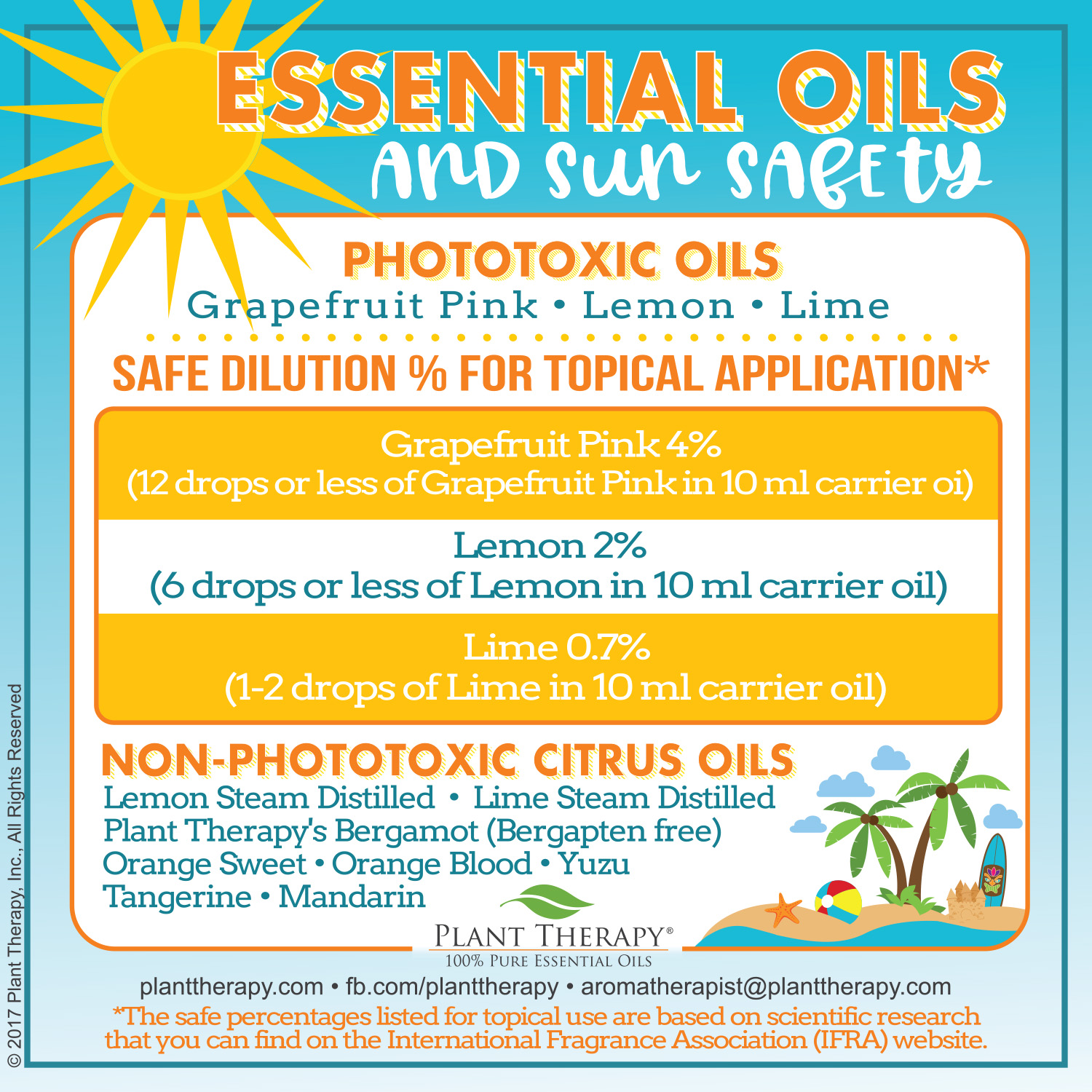
This essential oils sun safety chart helps identify oils that may cause photosensitivity and provides guidance for safe aromatherapy use. By understanding which oils require extra caution in the sun, you can enjoy the benefits of essential oils while protecting your skin.
FAQ
Which essential oils are phototoxic?
Some citrus essential oils such as bergamot, lemon, lime, and grapefruit may cause phototoxic reactions when applied to the skin and exposed to sunlight.
How long should I avoid sunlight after using phototoxic oils?
Many aromatherapy experts recommend avoiding direct sunlight for 12–24 hours after topical application.
Are all citrus oils phototoxic?
No. Steam-distilled citrus oils are generally considered safer because the phototoxic compounds are largely removed during distillation.
Once you understand sun safety with aromatherapy, you can explore our collection of pure essential oils and create your own safe diffuser blends and skincare recipes.